


DISCOVER OUR WEIRD & WONDERFUL
VINTAGE COLLECTION
Welcome to Timothy Oulton’s incredible collection of weird and wonderful VIP Vintage, procured over seven years of scouring the globe for the most interesting pieces. They’re fun, they have great provenance, and some, you won’t find elsewhere.
The Oulton family are from good stock - the antiques stock. Major Philip Oulton founded Halo Antiques in 1976, and both his son Tim Oulton and grandson Oliver Oulton grew up immersed in the antiques trade. An ability to see the intrinsic beauty in a product is in the Oulton blood.
A deep knowledge of history, craft, and design weaves its way into every Timothy Oulton design. We have always looked to the past for inspiration - classic silhouettes, reclaimed materials, traditional handcraftsmanship. We are experts at discovering old things and bringing them back to life, repurposed with our own point of view.
We look for three things when sourcing our vintage pieces: scale, rarity, and sense of humour. We see them as cool and unique art installations that you can display in your home and evoke conversation. They all have a story to tell. All pieces are available to purchase and are priced for their rarity.
FIREMAN'S LIFE NET
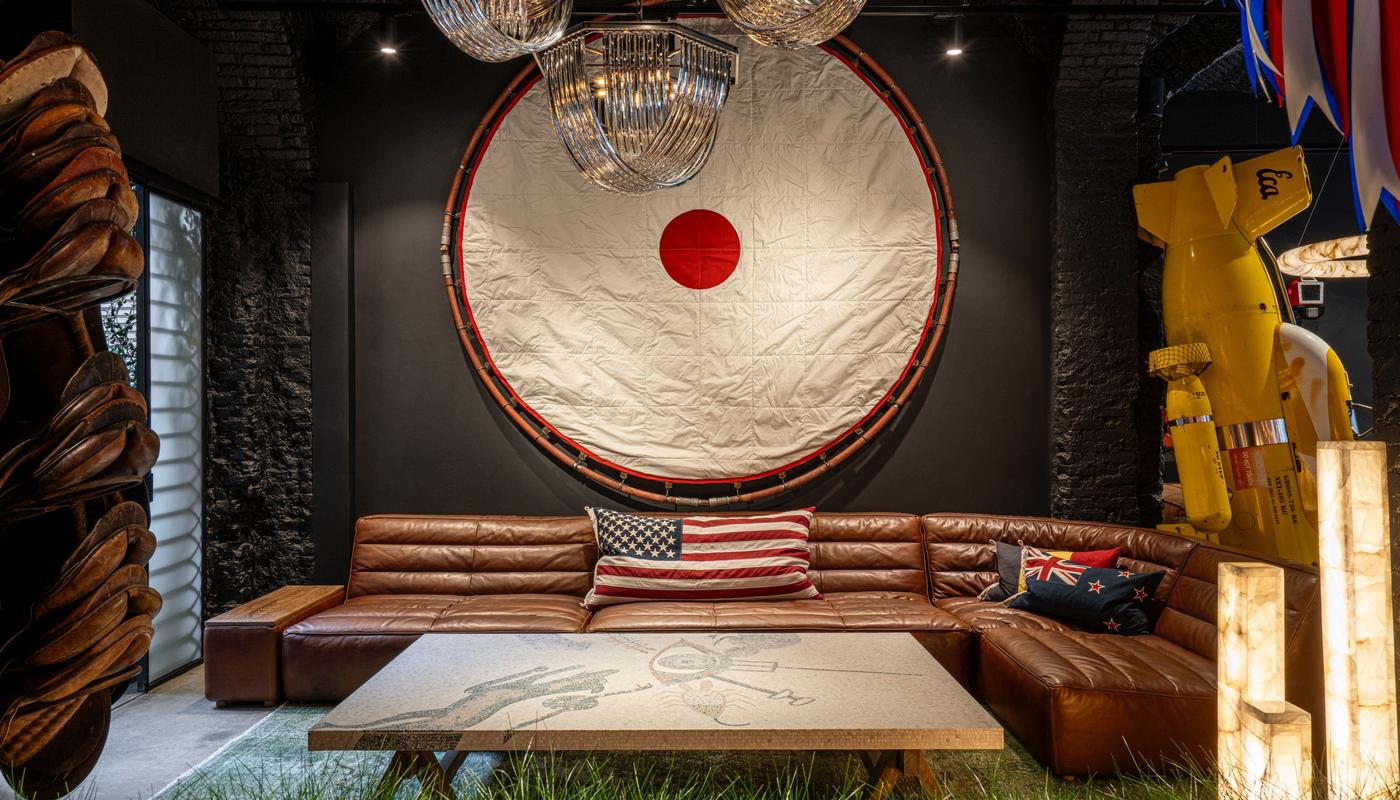
When we discovered this rare fireman's net, or "Atlas life-saving machine" to give it its proper name, we immediately fell in love with its shape, scale, and story. We were particularly drawn to the impactful red bullseye in the middle.
Patented in 1887 by Thomas F. Browder and manufactured by the Atlas Safety Equipment Company, the Atlas Life Saving Machine was used in the fire service for almost a century. Resembling a trampoline, it was designed to safely catch people leaping from burning buildings. The canvas landing pad folds in the middle for easy storage on the fire truck, and then springs into life when opened.
Hollywood has long played on the more humorous side of the fireman's net. Charlie Chaplin, Walt Disney, and countless cartoonists have used it as a running gag. It's that sense of fun that strongly resonated with us, and makes this vintage piece a great talking point for both its life-saving past and comedy appeal.
While you'll find examples of life nets in fire museums, utilitarian pieces such as this often don't survive due to their constant wear. As such, it is extremely rare to find one for sale, and in a condition as good as this one. The net was sourced in Los Angeles and dates from circa 1940.
YELLOW SUBMARINE
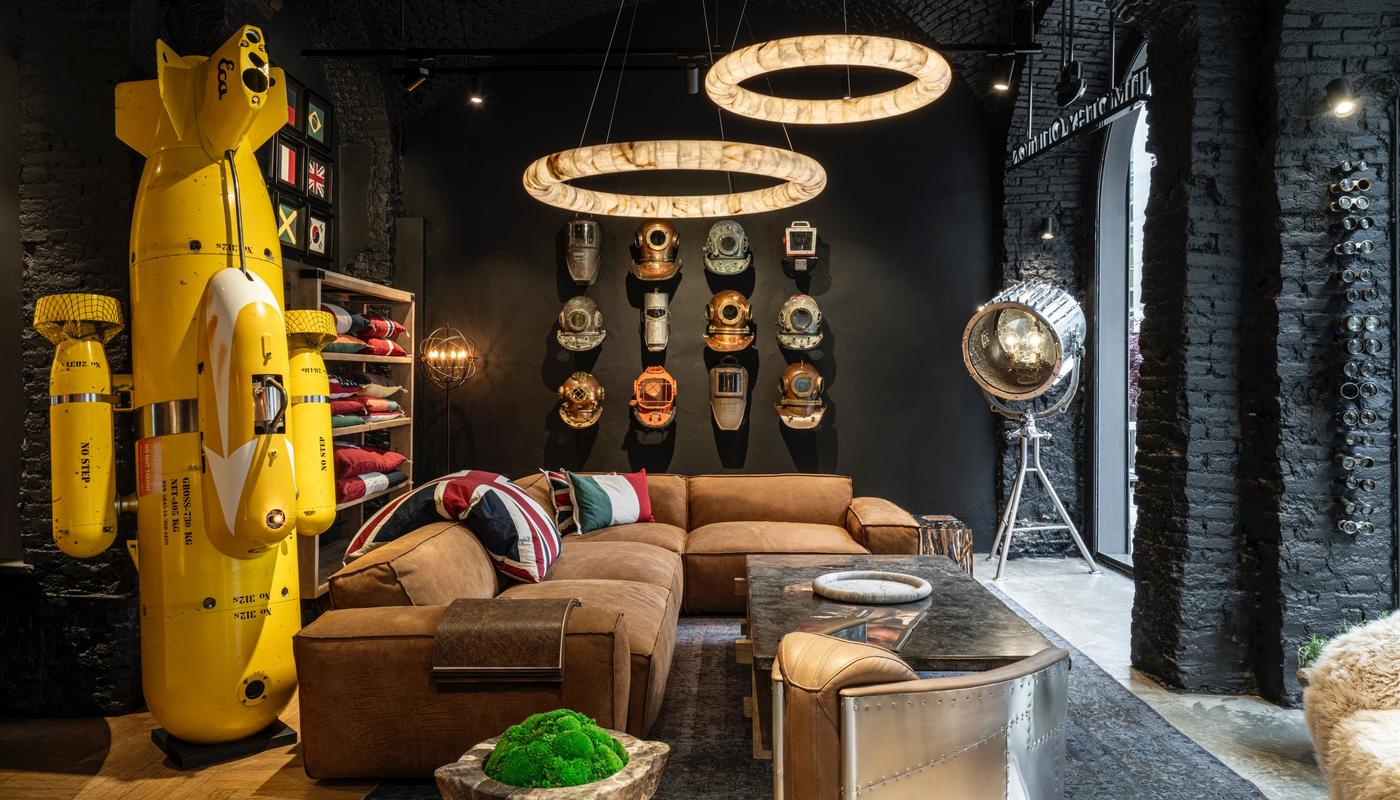
Our Yellow Submarine originally had a somewhat more serious purpose than its cheerful colour might suggest. First introduced in the 1950s, the PAP minesweeper submarine was known technically as an ROV (remotely operated underwater vehicle).
PAP minesweepers operate by means of a guide-rope, steered remotely to navigate through the water and identify the mines via camera or sonar. The mine is then destroyed by a controlled explosion or by severing the mooring cable. PAP vehicles are still in service with around 20 navies across the globe.
Our Yellow Submarine nods to the Oulton family's military background as well as a love of British rock and roll, referencing the iconic track by The Beatles. At once breathtakingly playful and audacious, its unique provenance and cultural relevance appealed strongly to us as a truly daring and authentic piece of history.
Measures approx 120x105x275cm.
SET OF 12 DIVING HELMETS
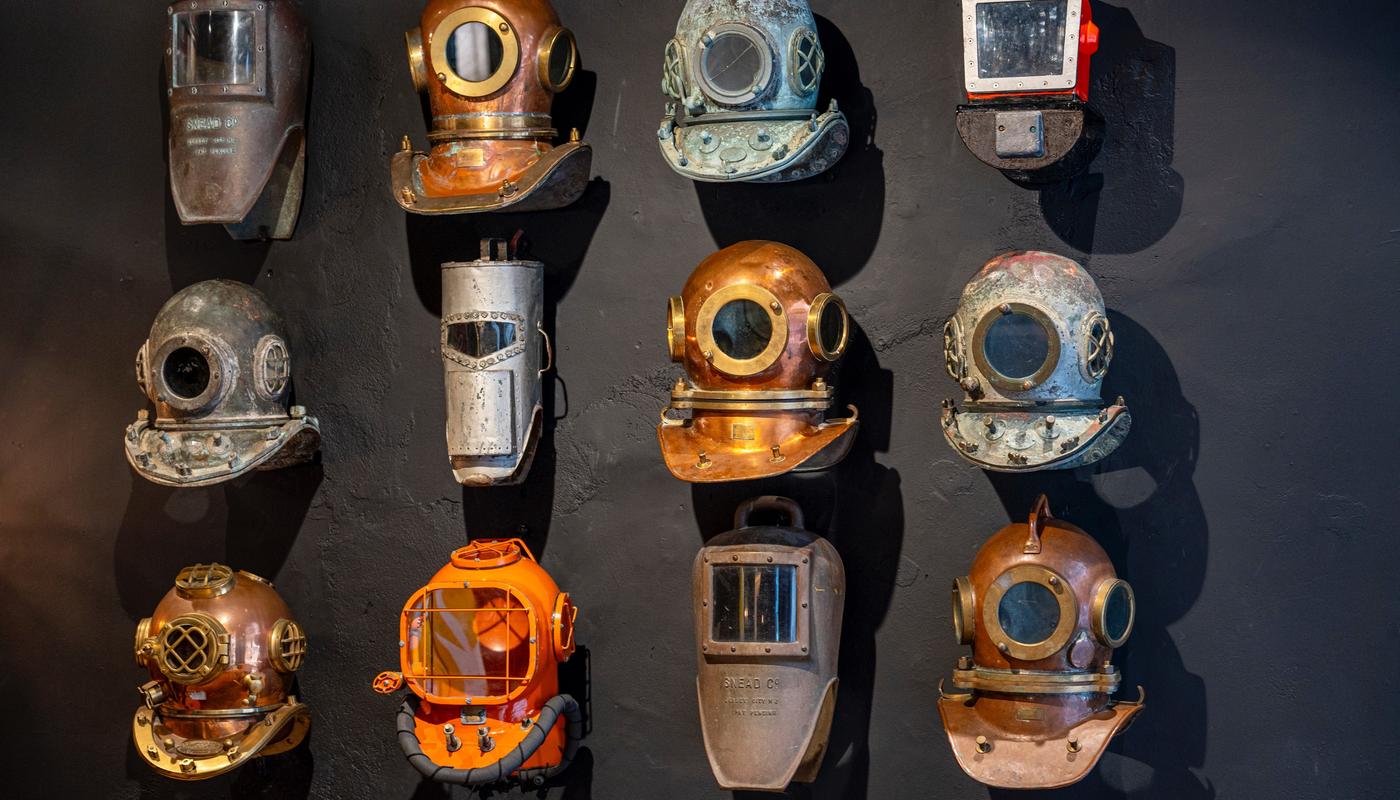
This superb collection of 12 different metal diving helmets was sourced from a private collector in Devon. We love the spirit of adventure and courage that diving represents - the intrepid discovery, journeying to the bowels of the ocean and going where no man before has gone.
The helmets come from all over the world and we love that each one is different, each with their own unique provenance.
1. Bronze shallow water helmet by Snead & Co, of New Jersey, USA.
2. A USSR 6 bolt standard copper air diving helmet.
3. Mid-20th century, Korean KIM diving helmet, 12 bolt, 3 light.
4. Swindell diving helmet with integrated helmet weights, Orange painted, USA, circa 1980.
5. Japanese TOA type12 bolt copper helmet. Mid-20th century.
6. An unusual 1930's American home-made tin helmet.
7. An early USSR copper, 3 bolt, 3 window, air diving helmet, model 111-3.
8. Korean 12 bolt Busan type diving helmet copper.
9. MK V Morse, mark five, display replica helmet, Morse Diving Equipment, Boston. Mass.
10. Orange painted steel shallow water diving helmet by Subaqueous Engineering, circa 2000.
11. Cast iron shallow water diving helmet by Snead & Co, of New Jersey, USA.
12. Soviet Union copper air helmet, 3 bolt, circa 1970.
Available to purchase as a full collection.
hovis sign
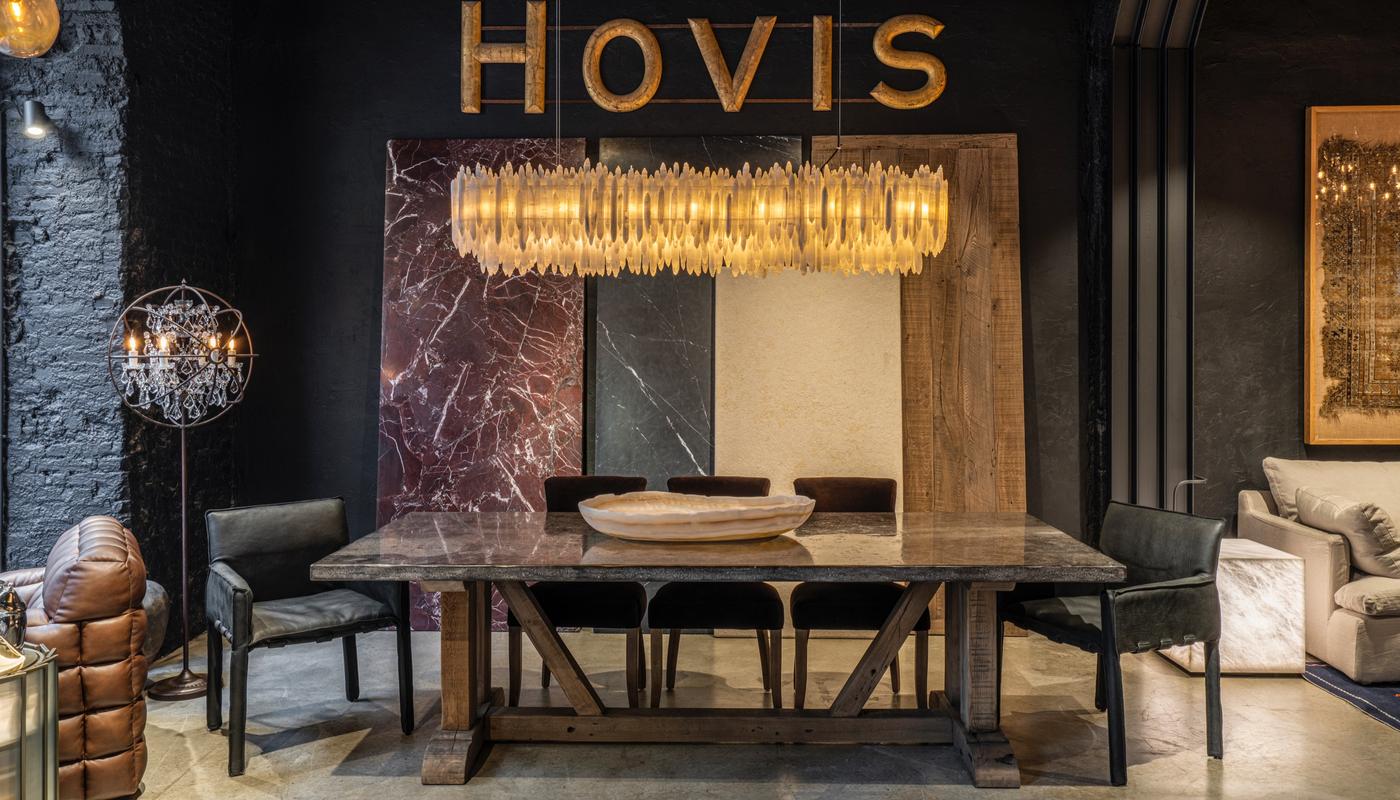
With the slogan "Still as good for you today as it's always been", Hovis bread is an English institution that represents tradition and family. This sign would have once stood in a bakery, and has been in our collection for 10 years. We were drawn to it because of its especially good quality. A large amount of time has been spent carving the wooden letters, which are covered in gold leaf.
Hovis was founded in 1886 and supplied bread to the Royal Family in the 1890s. The name "Hovis" comes from the Latin "Hominis Vis" which means "Strength of Man". During WW2, Hovis donated a Spitfire plane to the RAF, pertinently named Hominis Vis, which was used in the Battle of Britain.
In 1973, Hovis launched its iconic TV ad, directed by Sir Ridley Scott. The ad features a bakery boy delivering bread on his bicycle to the tune of "Dvorak's New World Symphony" which became known as "The Hovis Music". It's often cited as the nation's favourite ever TV commercial.
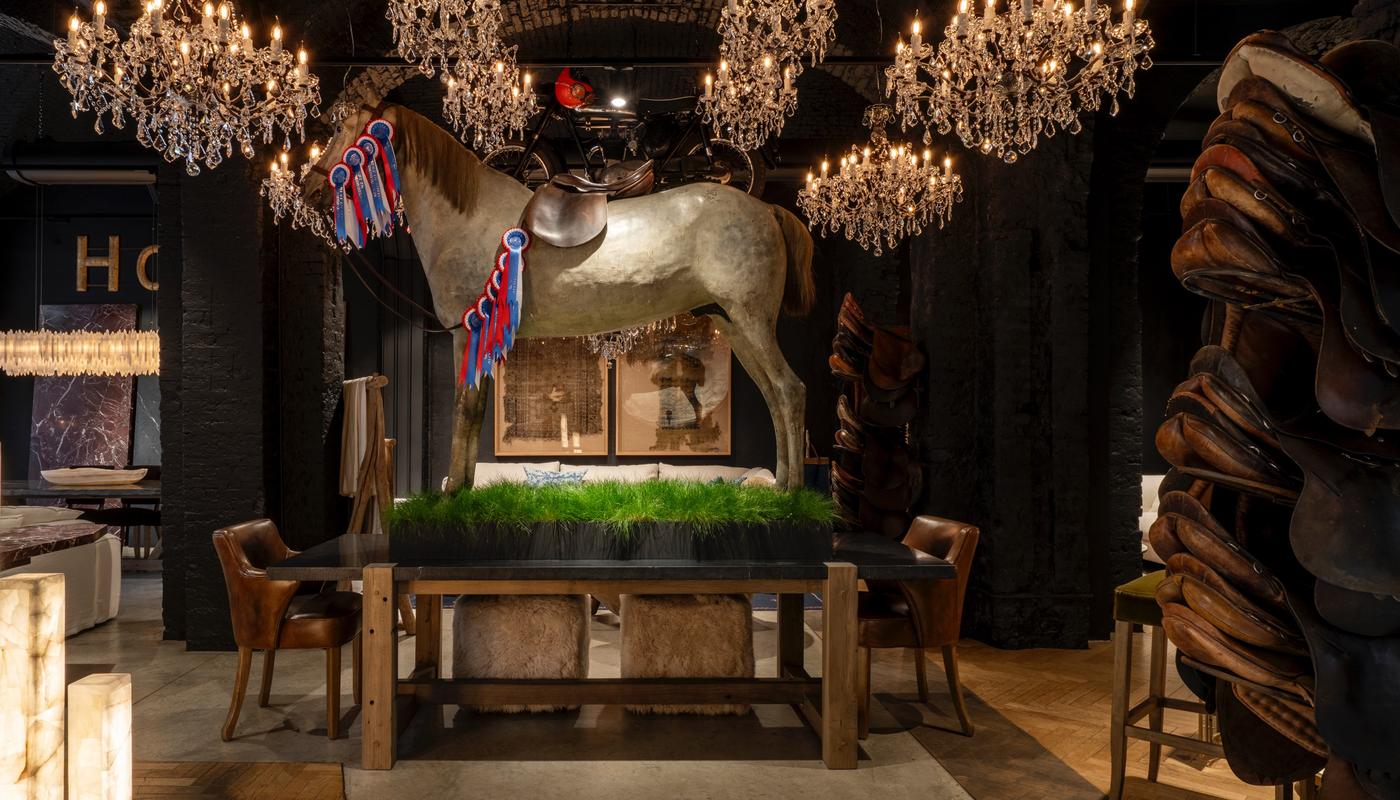
VINTAGE HORSE
This magnificent life-size horse has been a prize part of our vintage collection for many years. We've affectionately named her Matilda and she's travelled with us around the globe from London to New York, Hong Kong, and Milan.
Originally sourced in France, she would have likely been used as a prop horse in a saddle maker's shop to showcase luxury riding saddles.
This piece is of the most exceptional quality, sculpted by hand in paper mâché. Every detail has been painstakingly hand-painted, from the delicate eyes and facial characteristics down to the hooves. This is an incredibly rare and special piece, we've never seen another one like it.
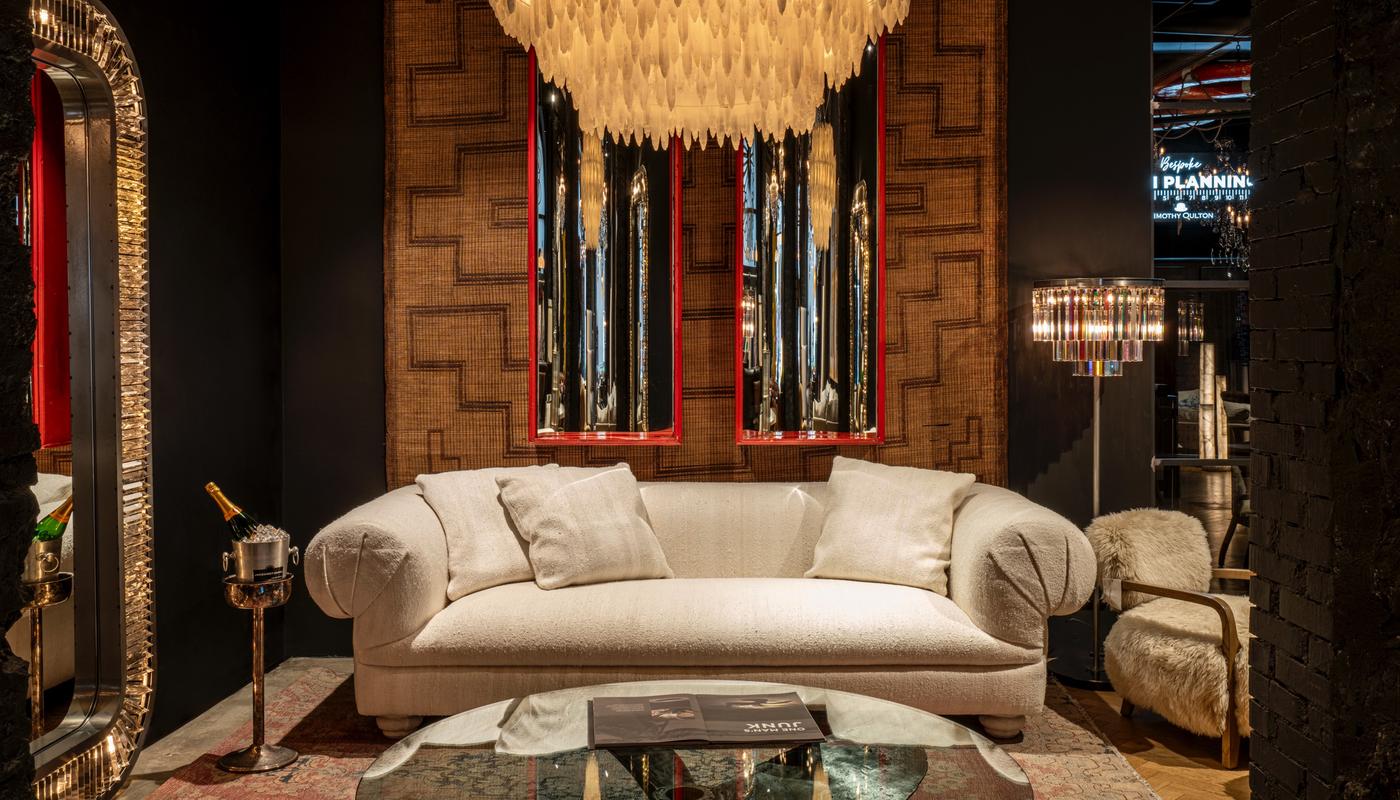
pair of fairground mirrors
Harking back to childhood fun, these vintage funfair mirrors distort your reflection with a playful sense of humour. One mirror is made with concave glass to make you appear short and fat, and the other is made with convex glass to make you appear tall and thin. This pair would have likely been part of a larger house of mirrors, a maze-like puzzle where visitors could enjoy various amusing reflections of themselves.
The house of mirrors concept was originally inspired by the opulent Hall of Mirrors in the Palace of Versailles. During a visit to France, Peter Stuyvesant was captivated by the palace's grand display, and decided to recreate this amazement in the recently founded city of New Amsterdam (modern day New York), of which he was governor. Peter Stuyvesant's House of Mirrors was founded in 1651.
Our vintage Fairground Mirrors are a super conversation piece, celebrating the joy of funfairs and the nostalgia of Britain's rich fairground heritage. Sourced from the UK and framed in painted red wood.
SAHARA CARAVAN RUG
Made in the early 20th century by Tuareg tribes in the trans-Sahara region. Rugs hold a significant place in Tuareg culture and have their own special history. The rugs are handmade by the tribe's women, and have been woven in a similar way for thousands of years.
The base is fashioned from reeds and palms, making each rug lightweight to carry and extremely durable, allowing it to withstand the harsh climate of the Sahara desert. Intricate strands of camel or goat leather are twisted through the base to create geometric patterns and powerful motifs.
The Tuareg tribes lead a nomadic life, carrying their tents and belongings wherever they go. Traditionally, the rugs were used as flooring and walls as they made their journey along the Saharan trading route. Once the traders reached Morocco, the rugs were sold to the souks and bazaars, making them an important part of the Tuareg economy.
Each rug is one-of-a-kind, developing its own patina with use. Imperfections and marks of age add to the beauty and uniqueness of each piece.
For more information and details on how to purchase, please contact our global flagship gallery at Bluebird in London.